
Understanding the Phosphorus Buffering Index and Its Importance in Soil Health
Phosphorus is a vital nutrient for plant growth, yet managing its availability in soil can be challenging. One key concept that helps farmers, gardeners, and soil scientists understand phosphorus behavior is the Phosphorus Buffering Index (PBI). This index measures how soil interacts with phosphorus, influencing how much of this nutrient remains available to plants over time. Understanding PBI can improve fertilizer use, protect the environment, and promote healthier crops.

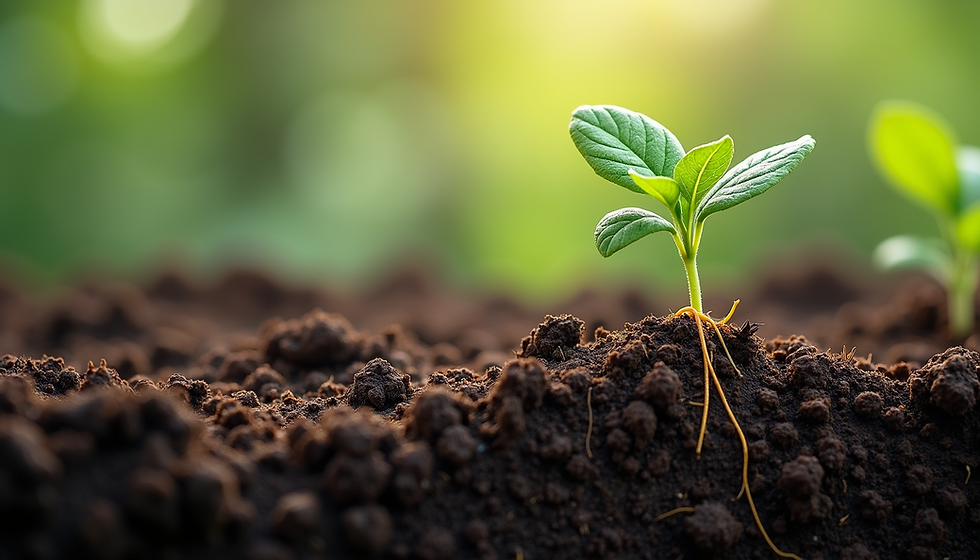
Close-up view of soil particles illustrating phosphorus retention and release mechanisms
What is the Phosphorus Buffering Index?
The Phosphorus Buffering Index is a measure of a soil’s capacity to hold onto phosphorus and control its release into the soil solution. Soils with a high PBI tend to bind phosphorus tightly, making it less available to plants but also less likely to leach away. Soils with a low PBI release phosphorus more readily, which can be good for plant uptake but increases the risk of phosphorus loss to waterways.
PBI is determined by soil properties such as clay content, organic matter, and mineral composition. These factors influence how phosphorus ions attach to soil particles or remain dissolved in soil water.
Why Phosphorus Buffering Matters
Phosphorus is essential for energy transfer in plants, root development, and overall growth. However, phosphorus availability is tricky because:
Too little phosphorus limits plant growth and reduces crop yields.
Too much phosphorus can cause environmental problems like water pollution and algal blooms.
The Phosphorus Buffering Index helps balance these concerns by guiding how much phosphorus fertilizer to apply and when.
How PBI Affects Fertilizer Management
Farmers use PBI to tailor phosphorus fertilizer applications to their soil’s characteristics. For example:
High PBI soils need more phosphorus fertilizer because much of the applied phosphorus binds tightly and is not immediately available.
Low PBI soils require less fertilizer since phosphorus stays more available but must be managed carefully to avoid runoff.
By understanding PBI, farmers can avoid over-fertilizing, which saves money and protects the environment.
Measuring the Phosphorus Buffering Index
Measuring PBI involves laboratory tests where soil samples are mixed with a phosphorus solution. The amount of phosphorus the soil absorbs or releases is recorded. This process includes:
Adding a known concentration of phosphorus to the soil.
Measuring how much phosphorus remains in the solution after equilibrium.
Calculating the soil’s phosphorus retention capacity.
These tests provide a PBI value that helps predict phosphorus availability in the field.
Factors Influencing Phosphorus Buffering
Several soil characteristics affect PBI:
Clay content: Clay particles have a large surface area and many binding sites, increasing PBI.
Soil pH: Acidic soils often have higher PBI due to iron and aluminum oxides that bind phosphorus.
Organic matter: Organic compounds can either increase or decrease phosphorus availability depending on their nature.
Soil texture: Sandy soils usually have lower PBI because they have fewer binding sites.
Understanding these factors helps interpret PBI results and manage soil fertility better.
Practical Examples of PBI Use
Example 1: Corn Farming in Clay Soil
A farmer with heavy clay soil finds the PBI is high. Applying standard phosphorus fertilizer rates results in little immediate benefit because the soil binds most phosphorus. Adjusting fertilizer rates upward and timing applications closer to planting improves phosphorus availability and crop yield.
Example 2: Vegetable Garden in Sandy Soil
A gardener with sandy soil has a low PBI. Phosphorus applied to the garden is quickly available but also prone to leaching. The gardener uses smaller, more frequent phosphorus applications to maintain availability without waste.
Environmental Impact of Phosphorus Buffering
Phosphorus runoff from agricultural fields is a major cause of water pollution. Soils with low PBI are more likely to release excess phosphorus into nearby streams and lakes. By using PBI to guide fertilizer application, land managers can reduce phosphorus loss and protect water quality.
Tips for Managing Phosphorus Based on PBI
Test your soil to determine PBI before applying phosphorus fertilizer.
Adjust fertilizer rates according to PBI values and crop needs.
Use split applications of phosphorus in low PBI soils to reduce losses.
Incorporate organic matter to improve soil structure and phosphorus retention.
Avoid over-application to prevent environmental damage.
Future Directions in Phosphorus Management
Research continues to improve PBI measurement techniques and develop soil amendments that modify phosphorus availability. Precision agriculture tools now integrate PBI data with GPS and soil sensors to optimize fertilizer use at a field scale.
Comments